Sunday, January 25, 2015

Secondary Sources and their Vitality


The first paper assigned to Humanities Core students for the quarter dealt with the use of Civil War images and representations of the war itself. We were required to visually analyze a Civil War image of our choice and explain how and why that image represented the war in the way that it did.
During my research process, I had a brief moment of panic due to my inability to find a proper image followed by a secondary source. The fact that I also had not written a visual analysis essay in my entire existence added onto my anxiety. However, with the guidelines provided by my section Professor and through the Humanities Core Course, I managed to eventually find both after browsing endlessly for them. After constantly looking for an image and its citation, I stumbled upon and found the image “A Soldier’s Dream of Home” on the Humanities Core Course’s “Image Gallery” link. After familiarizing with the image and its content and purpose at the time, I began to embark on finding the secondary source. I clicked on the links embedded in the “The Writing Process and Student Learning Goals” PDF and discovered databases that would grant me access to scholarly articles. Initially, I was lost in the sense that I did not have experience with databases and was clueless on how to search for material.

I looked at my image and began brain storming key words that would hopefully load up useful content to support it. I attempted to type in phrases such as “union soldiers in the civil war”, “homesickness in the civil war,” “sentimental domesticity”, “Currier and Ives”, etcetera. The key phrase that allowed me to find a great secondary source was “homesickness in the civil war”. That secondary source was none other than the article “Dying of Nostalgia: Homesickness in the Union Army during the Civil War” written by David Anderson. Anderson is a lecturer in the American Studies Program at Swansea University in Wales and is a graduate of the University of Dundee in Scotland. Currently, he is completing a study regarding post Reconstruction era plantation reminiscences. His article was published as a PDF on a database known as Project Muse provided by UCI. Anderson’s source discusses homesickness and the dynamics of Nostalgia among the Union Soldiers in the Civil War. There is a central focus on how soldiers associated home with love, family, and comfort. The article additionally provides justifications as to why they felt homesick or nostalgic and how it was their reality at the time.

Anderson's source was vital when writing my essay for various reasons. It aided in bringing clarity on why the soldiers felt cases of nostalgic and what they associated with home. He defines home and gives it a comforting connotation therefore making it uncomplicated to connect the concepts of sentimental domesticity and reality. Being sentimental towards their home and longing to return to familiar grounds had become their reality in the war. I referenced most of his article to support the concept of sentimental domesticity along with the studies made in the article to validate the concept. Overall, the secondary source I managed to get my hands on was essential and made the writing process of this writing assignment much simpler.

Most importantly, It brought relief of having to write this paper.


Source Images
http://picturinghistory.gc.cuny.edu/?p=916
http://www.redorbit.com/media/uploads/2013/07/fear-and-anxiety-shutterstock_104556128-617x416.jpg
http://www.therapyinmontreal.com/Portals/238135/images/anxiety-treatment.jpg


Monday, January 12, 2015

The Purpose of Omission


Upon reading the Narrative of the Life of Frederick Douglass, An American Slave, and discussing it in lecture and with peers in this course, we all realized something Douglass did in his novel. He tended to “silence” people and leave out certain aspects of his experiences from his audiences. Professor Fahs and Professor MacMillan pointed out that perhaps because of this omission, Douglass was unable to exactly put into words what he truly experienced, after all, it is indeed hard to write down all of the details of traumatic experiences we encounter. Aside from all the speculations, perhaps Douglass used the method of omission to shape and focus his story on the larger goal: reveal the horrific truths of slavery and help abolish the cruelty. Douglass believed that through his credibility as a slave and experiences he surmounted, he ultimately had the opportunity to tell his tales and shock the American public with what was really going on with slavery. Once the public knew of the treatment that was projected onto slaves there would be a potential chance to halt any further practice of the cruelty. Moreover, Douglass focused his novel primarily on slavery. He could not afford to distract his audiences through personal matter or reveal any significant people who provided “illegal” assistance for both his and their safety.

Slavery was introduced to America due to the failure of the eighteenth century indentured servitude system (a labor system established amongst the British colonies in North America). Young people, mainly poor British and German people, who desired to go to the New World  had to pay through labor on land. This resulted in endless debts and a failure in the system. They went to new extents to solve their financial problems by choosing to enslave Africans and have  them do endless labor in order to bring income and ultimately pay their debts. Therefore, they “justified” the idea of enslavement and purpose of working for white supremacy. Through the easy enslavement and manipulation, slaves were perceived by whites as naïve, ignorant, and incapable of having a proper education. Furthermore, African Americans were denied education to prevent them from realizing that slavery was not a natural state of life and ultimately revolting from white supremacy. Douglass resisted and learned to the alphabet while living in the Hugh Auld's household for seven years. Mrs. Auld tutored him but soon stopped as she later became hardened and cruel. However, Douglass's education did not stop there. With his prior knowledge of the alphabet, he was determined to read and write. He accomplished literacy by giving bread to poor little boys in exchange for reading lessons. As a result, he learned to successfully write and was determined to acknowledge their help. However, he decided to exclude their names in order to prevent their punishments but still gave them credit for their useful teachings. This is why omission at the time was crucial for both Douglass and for the sake of protecting lives.


Additional silences Douglass made were that of his personal life and slaves whom were affiliated and a part of the Underground Railroad. Mentioning that type of information would pave a way of punishments and potential deaths for those that were involved. As far as his personal life, he mentioned that he had a wife but left out their relationship and marital process. Perhaps including personal experience and love affairs would distract readers and stride his audience away from the harsher reality at that time. After all, Douglass's main objective was to tell primarily the details of slavery rather than entertain his readers on his marriage. Ultimately, the silences and omissions helped to shape the genre of the book as strictly a narrative on the horrors of enslavement.


After reading his narrative, I was left with several curiosities and questions that begged to be answered. Some of them are: How was your relationship with your wife? Are there any other experiences that you chose to leave out and why? Do you feel accomplished?


Source Image(s)
http://loc.gov/exhibits/books-that-shaped-america/1800-1850/Assets/ba0017_enlarge.jpg

 http://www.thegospelcoalition.org/blogs/trevinwax/files/2014/11/Marriage.jpg


Saturday, December 6, 2014

Identity Change


This fall quarter in the Humanities Core Course has truly reshaped my identity as an individual. I confess that before I did not have a mere interest for War or history. My world revolved around friends and family to discovering who I was and being successful. Now that I survived my first quarter in this course, I have evolved as a human being intellectually. This course has given me a taste of college course material, improved my writing skills, time management skills, and overall knowledge of war and how to interpret it.


In the past, I learned about several wars upon taking AP courses of history in high school. I was exposed to world history, the history of the United States, and to how our government functions and sustains itself. Although some of the content covered in class was interesting, I particularly did not show much care for it. My views were completely modified as soon as I began to expose myself to lectures and discussions of HumCore. The material shaped my intellectual mind in the sense that war is necessary when analyzing human actions in order to better understand the world. As we began reading captivating novels that dealt with various wars, I felt a change of interest. I began to have clarity and looked forward to every discussion and lecture.

 Apart from intellectual change, my writing and time management skills were put to the test. I was forced to change my procrastination habits when it came down to turning everything in on time. The papers and blog posts I had to write based on my knowledge and understandings of the course helped me to improve my writing habits. I used to previously worry for college and the obstacles I would ultimately encounter. The Humanities Core Course has allowed me to feel comfortable with writing a paper in college as well as adapting my schedules to due dates.

I have Evolved


As I sat in lecture the other day, realization struck my mind. I began this course very baffled and unsure that I would understand this course or know what to encounter. However, now that I look back, I realized that my understandings and interpretations of both this course and war have evolved immensely. War, to my understanding, is a destructive force that is inevitable and can create circumstantial effects. In the Humanities, we use war as means of interpretation of human action and how it serves as a force. War can ultimately limit an individual’s agency, can be told from various perspectives, and can reshape virtuous acts to be fatal to those who embody them and act alone.

In the Iliad by Homer, war was elevated and glorified heroic characters that ultimately fought in combat. Heroes such as Achilles and Agamemnon had something in common: they sought glory and immortality. Immortality in this sense meant to forever be remembered for one’s heroic actions. War was being utilized as an excuse to earn the title of a hero and be forever glorious. However, not only was it used for immortal glory and recognition, but it served as a force that limited one’s capacity of acting with free will. Hector, a father, mother, and husband had political and social obligations to his wife and son. War in this era called for every warrior to fight for their nation or else shame would be showered on those who coward out. Hector was forced to choose to follow such a culture and fight in combat rather than care for his family.

The Adventures of Simplicius Simplicissimus by Hans Jacob Christohoffel von Grimmelshausen and Mother Courage and her Children by Bertolt Brecht are both chronicles of The Thirty Year’s War. Although they are indeed fictionalized books, their purpose are vital and must be taken into consideration when interpreting war itself. Grimmerlshausen created Simplicius and set him off on various adventures and life changing experiences to show the effects that war has on individuals in low ranks of society. Simplicius takes on several identities and tried to survive in a world of destruction. In the end, Simplicius leaves society seeking to escape circumstance (war). Brecht brilliantly creates the genre of Epic Theater to denaturalize war with his play. In his play, Mother Courage and her children flee from financial ruin and follow the war in a wagon. Mother Courage desires to use this to her advantage by becoming a business woman and selling products to people in need of certain necessities. Along their travels, her children begin facing death by acting virtuously against war. The play has several instances where tragic moments are interrupted with inappropriate singing. Brecht did not want the audience to connect with the characters but rather understand that war is at fault for such destruction and should not be natural. It was meant to teach the audience to act virtuously in a collective manner and bring positive change.

            All these novels have successfully shaped my overall understanding of war and brought me to realize that it is indeed significant in the Humanities.

Sunday, November 23, 2014

Compassionate Heroism


Mother Courage and her Children had several scenes that were either entertaining or sometimes heart breaking. However, Bernolt Brecht ensured that his scenes avoided such an emotional connection with the audience by disrupting heartfelt scenes with inappropriate material and instead serve as a form of pedagogy. War was the environment around this time and people were exposed to it frequently that it had become a “way of life”. Brecht’s sole purpose of Epic Theatre was to teach the audience that war was not a natural phenomenon and the irony in such a play would denaturalize the catastrophic conflict.

War had become so natural that certain virtues were not adequate to make a difference in such a destructive world. For example, Mother Courage’s children embodied virtues that took them on a course of death even if their intentions were pure. Kattrin, a mute child, embodied two virtues: compassionate heroism. These two virtues set side by side granted her enough courage to sacrifice her life for the sake of others.

In this tragic scene, a Catholic Lieutenant and three soldiers in full armor come out of the woods into the town where Mother Courage and Kattrin and currently staying. The Lieutenant desires to find a guide and orders his soldiers to kill anyone in the town who makes a sudden noise. They knock on an old peasant woman’s home and barge in when she answers. The soldiers bring out the old peasant woman and her son and insist on the son providing a guide. The son refuses and is threatened to face immediate death along with his family and their cattle. Eventually the son complies and exits with the soldiers meanwhile the hopeless elderly woman prays on her roof as a way of bringing protection to her and her family from God.

Kattrin learns of the situation and bravely decides to climb on top of the roof and play a drum that she takes out from underneath her apron. She plays the drum willingly and the old peasants insist for her to stop due to their fear of the soldiers returning and causing wrath. The soldiers return and threaten merciless death to them all. One of the soldier “promises” Kattrin to spare Mother Courage’s life and in exchange to accompany them into town. She refuses and continues beating her drum simultaneously with the old peasant chopping up wood as an attempt to conceal the beating of the drum. The soldiers turn to such methods as to burn the farm, and Kattrin laughs. The irritated and angry Lieutenant orders his soldiers to bring a musket and the old peasant woman suggest to smash the wagon. As the situation worsens, the young peasant cheers Kattrin on to continue playing the drum and is eventually beat down by the soldier.

One of the soldier returns and shoots down the brave and weeping Kattrin. Her last beat of the drum mixed with the sound of a cannon as she attempted to save the town. Mother Courage returns from buying supplies to find her daughter lifeless on the floor. She hugs her dead daughter and begins to sing a comforting lullaby.

The situational irony in Mother Courage’s reaction is an example of the conventions of didactic theater. Brecht disrupted the audience’s emotional attachment to the characters and the tragic circumstances they faced to get them to realize what war has ultimately brought forth to them. Although the scenes in the play are fictional, Brecht wants to get across the idea that war can bring all sorts of tragic moments but war must be prevented or halted. He thus believes that change must be brought forth. However, individual acts will not bring any effect other than death just how his fictional characters that embodied fatal virtues inevitably died. Rather than individual virtuous acts, Brecht encourages collective action as a method of changing and maybe putting an end to war since it will only bring forth destruction and death.
Image Sources
http://bellairebuzz.com/wp-content/uploads/2014/09/compassion.jpg
http://www4.big.or.jp/~j-i_2/SJC/LiteratureText/drum2.jpg

Sunday, November 9, 2014

The Effects of Translations


The sacking of Magdeburg was and is truly remembered as a “local apocalypse.” King Gustavus Adolphus of Sweden and his army landed in the German territory and claimed it their own (imperialism) as means of justifying the violent sacking. Several poems through their syntax and diction describe the very event as gruesome, bloody, and tragic. Andreas Gryphius translated the original poem of the event in German and English. Both his German and English translations of the event repeat the words “Blood” and “Death” which add grotesque and cause the reader to picture the chaotic event. The carefully chosen phrases of “behold our devastation”, “thundering siege gun”, “blood-slick sword”, “the church is overthrown; our mighty men are slain”, and “virgins are raped; and everywhere we turn are fire and plague, and death to pierce us-heart and brain” demonstrate the chaos that the civilians of Magdeburg experienced. It basically explains the ruin and end of their civilization when the Roman Empire took over however they (the translated poems) are a mere translation that are not as gruesome when compared to the original poem of course. Though Gryphius did a well job of depicting the event through the very power of his chosen diction and maintained the elements of what makes a poem truly poetic.

When compared to Otto von Guericke’s and Julie K. Tanaka’s accounts of the Thirty Year’s War, theirs was not as grotesque or gory. Blood being shed and the battle’s chaos are not really mentioned in their translated version of the sacking. Tanaka’s version was written with a focus on the motive of the siege and the statistics/facts of the event. She mentions the numbers of the dead, the countries involved, and the leaders who clashed with power. She sticks to accurately describing the event without much exaggeration or emphasis in order to maintain a more statistical/historical scope.

In James Harvey Robinson’s translation of the Guericke’s account, he chooses to not mention any statistics or whom was involved in terms of leaders of the event. Instead he describes the sacking of Magdeburg through the paradigms of those who neighbored the civilization. He does appeal to pathos with his choice of words comparing Magdeburg as a “fair princess” who is succumbed to such forces. Robinson avoids mentioning the statistics of the sacking simply to focus the event as emotionally tragic and validates the main title of the original poem by mentioning “tears, woes, shrieks and cries” simultaneously.  


Works Cited

Gryphius, Andreas. "Tears of the Fatherland." Trans. Ivo Mosley. Burke, Carol M. Humanities Core Course: Guide and Reader. Boston: Pearson Learning Solutions, 2013. 47-49. Print 

Guericke, Otto von. "The Siege of Magdeburg." German History in Documents and Images. 1631. 3 Nov 2014. <http://germanhistorydocs.ghi-dc.org/pdf/eng/85.SackMagdeburg_en.pdf >

 Robinson, James Harvey. "Guericke Translation 2." Hanover College Historical Texts Project. <https://eee.uci.edu/13f/27042/weekfive/GoerickeTranslation2.pdf


Sunday, October 19, 2014

War and Property

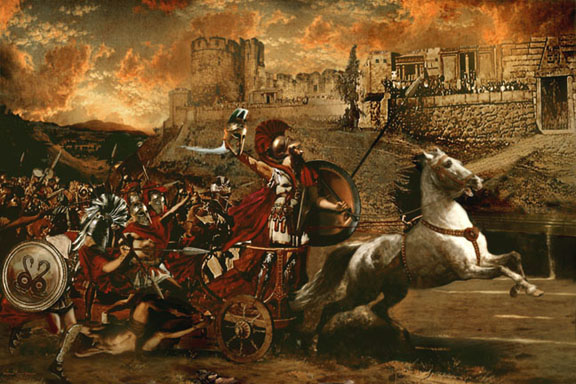
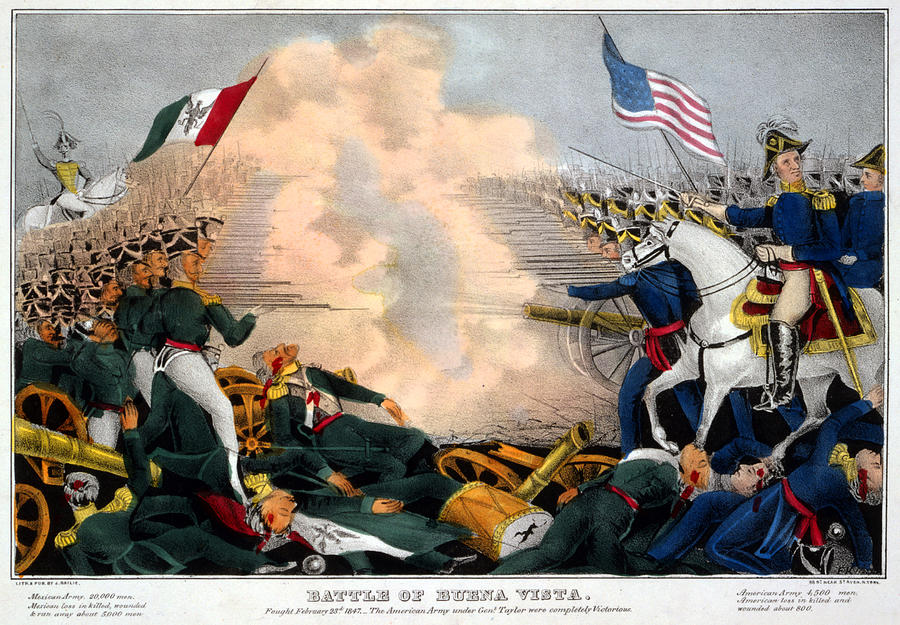
The Iliad is the first great epic to depict War and the gruesome deaths that the warriors inevitably faced. Some historians still question how the war between the Greeks and the Trojans errupted. According to Homer, the ten year war began due to Paris, Prince of Priam, stealing Menelaus’s wife Helen. Menelaus, Achaean and brother of Agamemnon, naturally was angered and demanded for his wife to be “returned”. The war soon broke out and the Gods began to intervene complicating the war and stripping warriors from their agency. The main objective of the war, according to Homer, was to retrieve Helen. Through the very cause and objective of war, women were seen as prizes and property. For example, Agamemnon leader of men stole Briseis from Achilles causing him to flee the war and stop fighting. Achilles was enraged and believed he deserved Briseis since she was his prize. Achilles’s tantrum and desire further demonstrates women being objects/prizes to man. This very idea can be bridged to wars fought for property or territory in the past. Of course nations did not fight for women but they believed in expanding their powers by conquering land and making it their property. They were ruthless if their property was taken from them. According to the article “Mexican-American War” written by The Editors of Encyclopedia Britannica, the Mexican-American War was fought between the United States and Mexico (April 1846-February 1848) and it stemmed from the annexation of Texas in 1845. President James K. Polk sent John Slidell on a secret mission to Mexico City to attempt to negotiate a deal to purchase New Mexico and California for up to thirty million dollars. Mexican President Jose Joaquin Herrera refused the negotiation and Slidell fled back to report to President Polk. On May 9, 1846, Polk began to prepare a war message to congress justifying that their refusal to pay American claims was unacceptable. “Most Whigs viewed Polk’s motives as conscienceless land grabbing. And abolitionists saw the war as an attempt by the slave states to extend slavery and enhance their power when additional slave states were created out of the soon-to-be-acquired Mexican lands” (Britannica, paragraph four). The United States felt as if they owned property that already belonged to Mexico just as Agamemnon already claimed Briseis and took her from Achilles. Ultimately, wars can be fought for property and which reflect the Trojan War from The Iliad.


Works Cited

Fagles, Robert, and Bernard Knox. The Iliad. New York, N.Y., U.S.A.: Viking, 1990. Print.


The Editors of Encyclopedia Britannica. “Mexican-American War” Britannica. 19 August. 2014.
<http://www.britannica.com/EBchecked/topic/379134/Mexican-American-War>
 

Image Sources
http://www.thejohnsongalleries.com/Achilles_Triumphant.jpg
http://images.fineartamerica.com/images-medium-large/1-mexican-american-war-battle-of-buena-everett.jpg